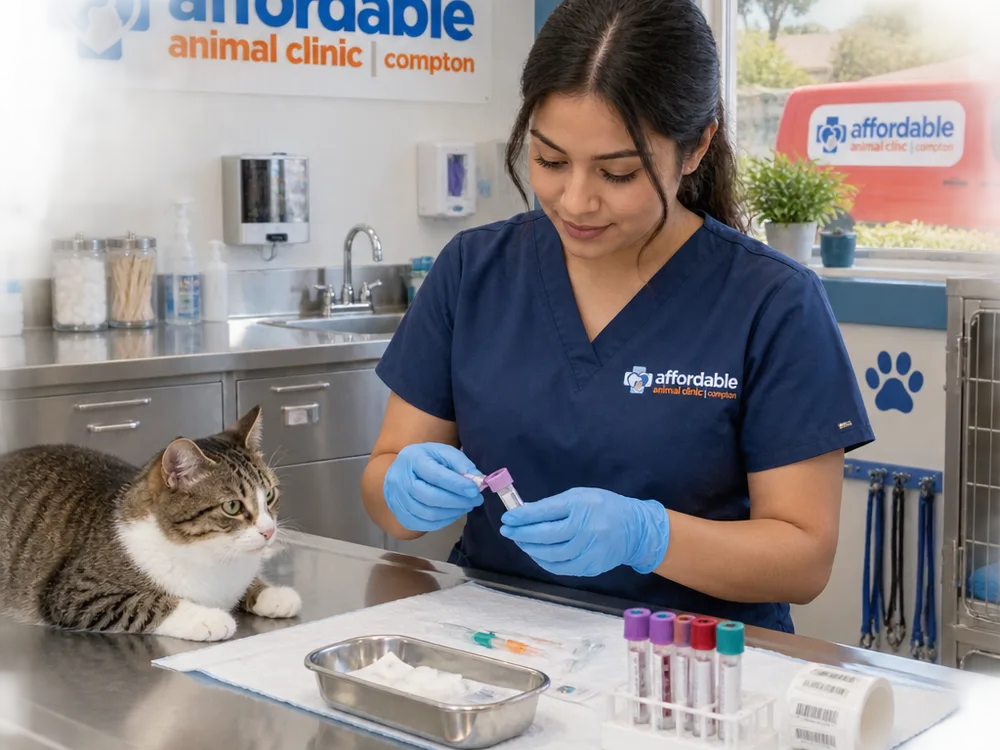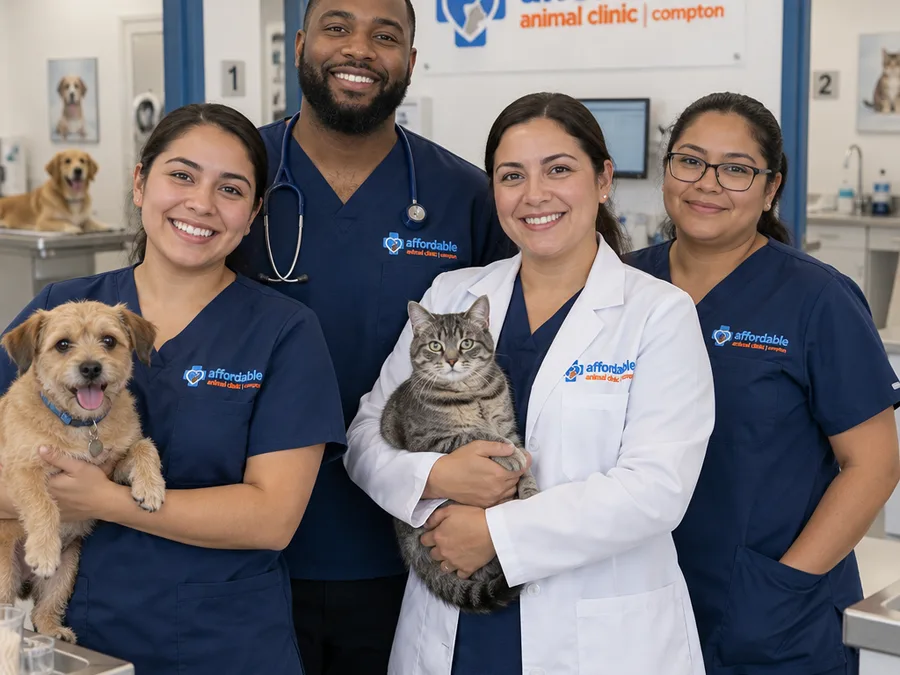
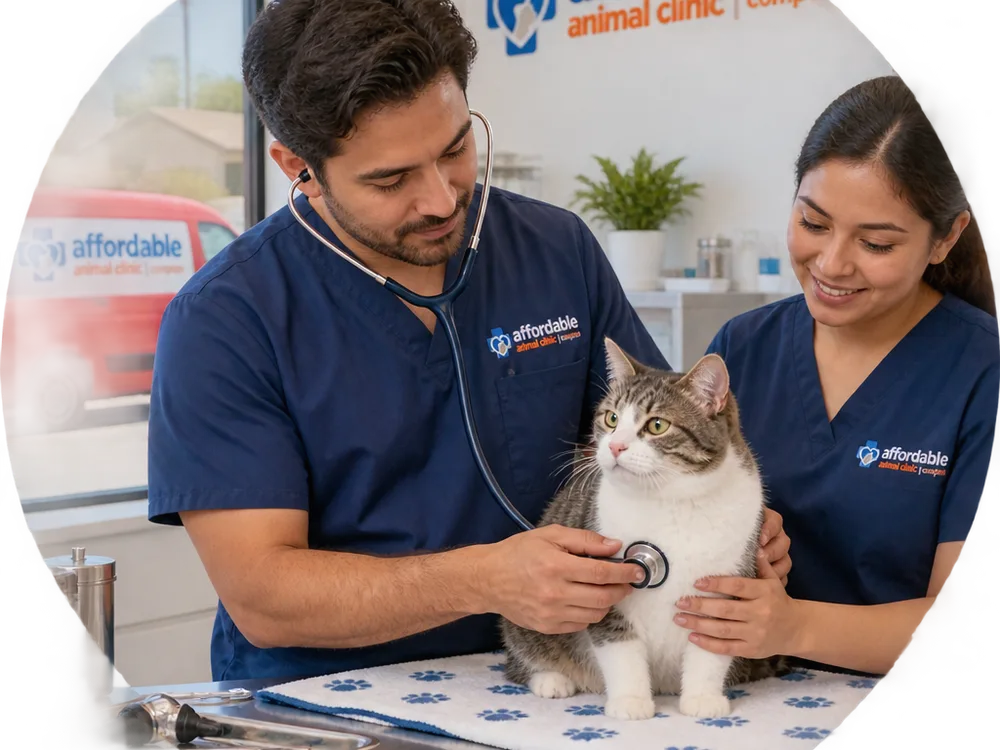
A real physical exam
Heart and lung auscultation, abdominal palpation, oral and ear checks, skin and coat review, weight and body condition scoring, and mobility assessment when limping or stiffness is part of the story.
Serving Compton, California & surrounding areas
Mon–Fri 8am–6pm · Sat 9am–2pm
Straight answers, careful exams, and practical treatment plans for dogs and cats in Compton. Bring your concerns and your pet's history; we will help you decide what to do next and what can wait.
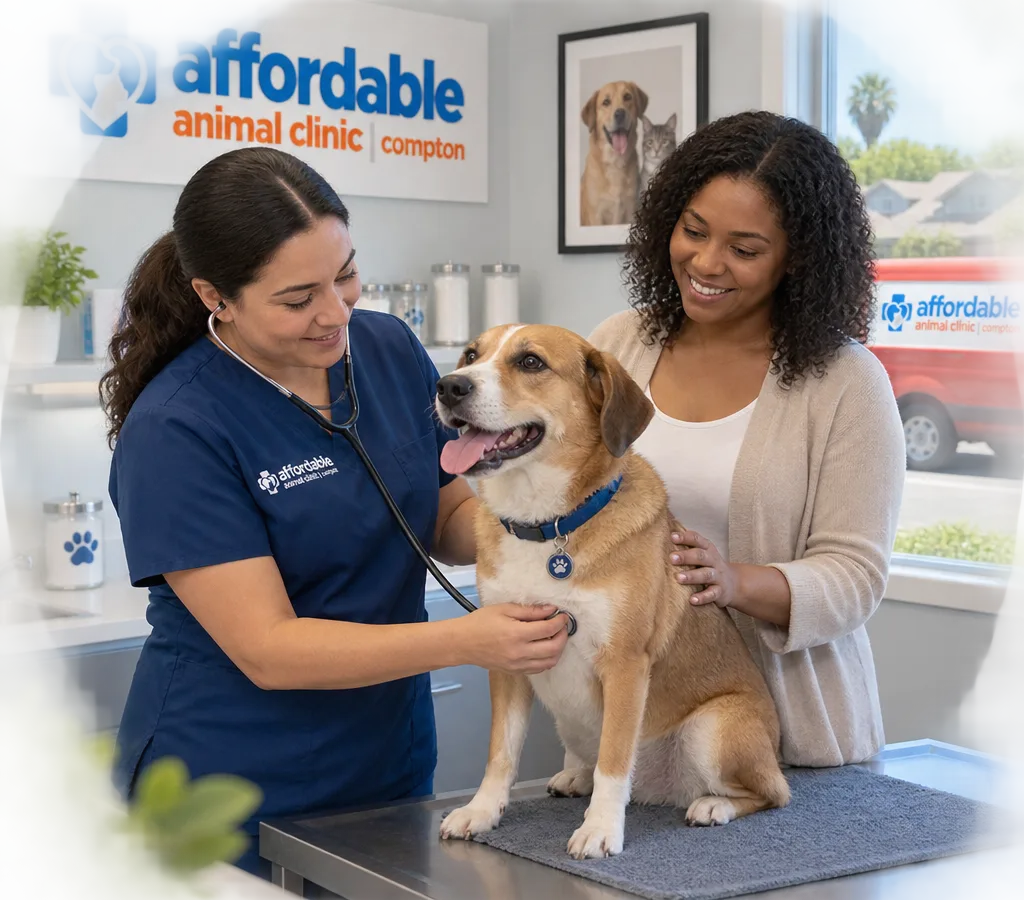
If you are searching for a veterinarian Compton pet owners can rely on, you likely want two things: a clinician who explains what they are seeing, and a plan that fits your pet and your budget. At affordable animal clinic compton, our team focuses on the fundamentals that keep pets well: a thorough nose-to-tail exam, clear medical notes, sensible diagnostics when they change the plan, and follow-up guidance you can actually use at home.
Compton families often juggle busy schedules and traffic patterns that make appointments hard to squeeze in. We keep visits efficient without rushing the medicine. Whether your pet needs a wellness check, vaccines, help for an itchy ear, stomach upset, limping, or you are worried about eating or drinking changes, you will leave knowing what we found, what it likely means, and what the next step is.
You will also find the same care philosophy across our whole team at Compton's local affordable animal clinic service, with an emphasis on respectful handling and straightforward communication.
Heart and lung auscultation, abdominal palpation, oral and ear checks, skin and coat review, weight and body condition scoring, and mobility assessment when limping or stiffness is part of the story.
When testing or treatment choices exist, we explain what each option can confirm, what it costs, and how it changes decisions so you can choose confidently.
We tailor vaccine and parasite-prevention recommendations to your pet's lifestyle, including outdoor time, multi-pet homes, and exposure to dog parks, grooming, or boarding.
You get a plan with timelines: what to watch for tonight, what should improve within a few days, and what signs mean your pet should be rechecked sooner.
Cats and anxious dogs do better with quiet rooms, slow approaches, and restraint that protects the patient without escalating fear. We build that into how we work.
Most visits fall into two buckets: preventive care and problem visits. Preventive care includes wellness exams, vaccines, and guidance on nutrition, dental health, and parasite prevention. Problem visits are for new symptoms or ongoing issues that are changing.
Typical concerns we evaluate include vomiting or diarrhea, coughing or sneezing, ear odor or head shaking, itchy skin or hair loss, limping, red eyes, decreased appetite, increased thirst or urination, and lumps you can feel during petting. For senior pets, we also talk through mobility, weight changes, and whether screening lab work makes sense.
Because Compton sits in a warm Southern California climate where fleas and some parasites can be a year-round concern, prevention and early treatment matter. We will help you choose a plan that matches your pet's exposure risk and your household routines, not a one-size-fits-all checklist.
We start with your main concern, timeline, diet changes, medications, and any recent grooming, boarding, or new pet exposures. For wellness visits, we confirm vaccine history and lifestyle.
A hands-on physical exam guides everything that follows. Many issues can be narrowed down by exam findings alone, which helps avoid unnecessary testing.
If diagnostics are indicated, we explain what each test can tell us—for example, fecal testing versus a more complete parasite screen, or basic bloodwork versus a broader panel—and how results change treatment.
When treatment is needed, we review how to give medications, what side effects to watch for, and what improvement should look like over the next few days.
Some problems should be rechecked quickly if they do not improve. We tell you what should trigger a recheck, and we document the plan so the next visit starts with context.
A veterinary exam in Compton typically ranges from about $60 to $110 for an office visit, while visits that include vaccines, lab testing, or treatment commonly total $120 to $350+. Sick visits with bloodwork and imaging can run $300 to $900+ depending on what is needed.
Your final price depends on the type of exam (wellness vs. illness), which vaccines are due, your pet's size and age, whether lab work or X-rays are recommended, and whether medications are dispensed. Exact costs are confirmed during the exam after we review findings and options.
“They explained what they were checking during the exam and gave me clear choices for next steps. I didn't feel rushed, and my dog started improving within a day of starting the plan.”
“I brought my cat in for a sudden loss of appetite. The vet was straightforward about what could be going on and what tests would actually change treatment. I appreciated the honest breakdown.”
Choose a veterinarian who does a full physical exam, explains options in plain language, and documents a clear follow-up plan you can repeat at home. In a busy area like Compton where it can be hard to return quickly, clarity matters: you should leave knowing what to monitor overnight, what improvement looks like, and what specific signs mean your pet should be rechecked.
Yes, many clinics can schedule a multi-pet visit, and it often saves you time, but it works best when you mention it while booking so enough exam time is reserved. If one pet is sick and the other is due for routine care, we can typically handle both, while keeping the sick pet's evaluation as the priority.
Bring any vaccine records, prior lab results, a list of current medications and supplements (including doses), and details on diet and treats. If the issue is GI upset, a photo of stool or vomit and a timeline of meals can help. For skin and ear problems, note grooming or bathing products used and when symptoms started.
A general-practice veterinarian typically provides both wellness care and evaluation of common illnesses, and that continuity helps because your vet can compare findings over time. If a problem needs specialty care, your primary veterinarian can still coordinate the workup and help interpret results so your day-to-day plan stays consistent.
Bring your pet in the same day if there is repeated vomiting, blood in stool or vomit, marked lethargy, signs of dehydration, a painful abdomen, or if your pet is very young, very small, or a senior. For a single mild episode in an otherwise bright pet, an exam is still a good idea if it continues into the next day or appetite drops, because early assessment can prevent a small problem from turning into dehydration.
Core vaccines are standard for most pets: dogs commonly receive rabies and distemper/parvovirus combination vaccines, and cats commonly receive rabies and FVRCP. Lifestyle changes the add-ons, such as exposure to other animals through boarding, grooming, or frequent dog-park visits. Your veterinarian will recommend timing based on age, prior vaccine history, and risk.
Tell us what you are seeing at home and what your goals are for the visit. We will schedule an exam, talk through realistic options, and help you make decisions you feel good about.